The Michigan soil is very sandy. The water table is high, but any water I put on the garden runs through it because of the sand.
I had some landscaping done around the house, and I took all the old dirt, full of weed seeds, to the vegetable garden. Because the landscaping had been repeatedly mulched, my reasoning is that the mulch has broken down over the years and will provide beneficial organic material to the sandy garden soil.
I am anxious to start my seeds. It has been a cold, wet spring and I think it is high time to get the seeds either in the ground (radishes and peas) or in the seed-starting trays (tomatoes and peppers).
Due to medical condition, I am restricted from many of my favorite vegetables. No more rhubarb, swiss chard, spinach, kale, strawberries, raspberries or blueberries for me. I am debating whether to put them in my garden anyway.
Saturday, April 30, 2016


Saturday, August 09, 2014
Yellow Transparents are ripe!

I picked two half- bushel baskets. Yellow trasparents are the best apples for pies, in my opinion. Plus they always remind me of my childhood, climbing the apple tree in my grandmother's yard. Not sure if I will have time to bake an apple pie tomorrow. Tonight we are going to watch The Hundred- foot Journey. Maybe I will be inspired.


Sunday, July 13, 2014
Orchards
Apples
We have an orchard. It was a long journey, and I am still on
the road. We have an orchard and yet, I
do not manage the orchard. I am 57 years old, and it is still an orchard dream.
I dreamed of having
an orchard when I lived in Johnny Appleseed country in Richland County, Ohio. Unfortunately for me, like Johnny Appleseed,
once I planted an orchard, I moved on.
I lived in an apartment, just out of college, and with a
good job. No room for a garden, only
pots on the fire escape in a downtown apartment. I lived there a few years, until there was a
murder outside my window. I scraped
together my assets and moved on.
I had enough money for a down payment on a mobile home
(almost). I borrowed the rest from my
grandmother. My grandmother had a lot of
money in the bank, the result of having been parsimonious during the Great
Depression and afterwards. She lent me
the money I lacked, and I paid her the going interest rate of 4%, knowing that
she and my grandfather had worked at jobs for $.25 an hour or less to earn that
money. I made sure I paid her on time and with the full amount of interest that
she might have earned in her savings account. It was proud day for me when that
debt was paid off in full.
I lived in the mobile home for a few years. I paid my “mortgage”, and I paid my
grandmother, and I paid the lot rent, and I paid the utilities. Unfortunately,
I learned about the “rule of 78”. That
means that you pay all the interest up front, and when you are halfway done
paying off the mortgage, you still owe the original amount of the mortgage, in
principal. My naivety. Their profit. My kids came along. I paid my husband’s credit card bills, my
naivety. His profit. I paid the grocery
store. All the time I longed for a patch
of land to call my own, where I could have an orchard.
My new husband and I bought a house on 2 acres. I rented the mobile home to a coworker. She was a great renter, paid on time every
month. The new house was next door to a
home with established apple trees, and had 2 young trees already planted. I was
really looking forward to my orchard.
The neighbors were great, they were friendly, and the property backed up
to a private park, with ATV trails to the lake.
We got a membership at the lake club and life was good for me and my
kids. Maybe not so good for my husband
and his girlfriend. They went through a
lot to convince me that I should not be married to him anymore. OK. So
it is. I get the house (and the apple trees) and he gets a reduced amount of
child support. My renter moves on to a
new job, and I sell the mobile home.
A job change means I get to move to Michigan. No fruit from
the apple trees in Ohio yet. OK. I will move, because I need the job to
survive with my kids. We move. Michigan is different. Way different. We are in a “metropolitan area”
instead of a small town. The
neighborhoods are measured by “Mile Roads” and the further north of 8-Mile, the
better the neighborhood.
My back yard is really small. It backs up to the middle-school track, and
is just around the corner from the park, so the kids learn to live in a
metropolitan area. My oldest daughter
was in elementary-middle school and the youngest was just starting
kindergarten. There is no room for an apple tree, but a family of skunks make
its home under our porch.
I start dating again, and fall completely in love with the love of my life. Unfortunately for the apple trees in my back yard. They were just starting to bear fruit, and I had to move again.
But, as it turned out, he owns an orchard in Michigan! There are Northern Spys, Grimes Golden, MacIntosh, Steel Red, Yellow Delicious, Red Delicious, Greening, Yellow Transparent, Jonathon, one Wagner, and one Red Astriken. There are also pear trees and a single Damson plum tree. The trees are old, and haven't been properly pruned for many years.
His back yard in Ohio had a MacIntosh apple tree. For some reason, it did not bear well. He said it is because MacIntosh is a variety that has a heavy crop one year and a light one the next. We never got the heavy crop.
Fast forward, the factory closed. We move to Michigan. There are two Cortland apple trees in the backyard. I did not even realize they were real fruit trees until 2013, when I harvested a bushel of apples from each tree! It was the first time I got a real harvest from an apple tree that I owned!
Monday, May 19, 2014
A little Logging
May 16 - Trespassers on the farm found about a pound of morels. The neighbor kept them talking until Ed arrived. The nice young men apologized and said that their uncle "Brian McCarthy" had told them it would be OK since he knew the owners and the owners lived in Indiana. Ed confiscated the morels.
I do not know that Brian McCarthy, but his nephews are good morel hunters. We enjoyed them.
 May 17 - spent the morning looking for my own morels. I found a few more. It was interesting, I noticed May Apples near where they were found, but I also noticed Purple Deadnettles very close to most of them. CLICK HERE for a photo. Saw a pickup truck high-tailing it off the property when I got close to him.
I found morels along the edges between woods and fields for the most part. Limited ingredients on hand at the farm, I cooked spaghetti, asparagus (from my garden in metro Detroit), cream sauce made with cornstarch and milk, and some mushrooms
May 18 - spent the morning tromping around the woods again. Found NOTHING. The weather was a little warmer, in the 70's. A couple drove into the driveway and asked Ed for permission to hunt mushrooms. Nope! Came home. Ed mowed the lawn. He found a morel in the front yard. Menu for dinner: fried mushrooms (a little flour/breadcrumb, dip in egg/milk, dip again in the flour/breadcrumb mixture, fry in butter, turning frequently) as an appetizer, chicken thighs in gravy and broccoli. Watered neglected tomato seedlings which look dessicated. Spent some time reviewing morel-hunting procedures in Michael Kuo's excellent book.
May 19 - After eating at a pricy restaurant, came home and picked about 10 stalks of asparagus here. Looks like maybe I could pick a cup or two of rhubarb later this week. Tomato seedlings have recovered some, but some will not revive. Checked on the elderberry plants from 2 years ago, cannot find them. Checked on last years blueberries, they are growing. Put a couple of stakes near them so that Ed does not mow over them. Weeded flower garden a little, pulling those persistent sow thistles or whatever they are and some bindweed. Realized that pulling stinging nettles without gloves was not a good idea. Retreated to the house!
I do not know that Brian McCarthy, but his nephews are good morel hunters. We enjoyed them.
I found morels along the edges between woods and fields for the most part. Limited ingredients on hand at the farm, I cooked spaghetti, asparagus (from my garden in metro Detroit), cream sauce made with cornstarch and milk, and some mushrooms
May 18 - spent the morning tromping around the woods again. Found NOTHING. The weather was a little warmer, in the 70's. A couple drove into the driveway and asked Ed for permission to hunt mushrooms. Nope! Came home. Ed mowed the lawn. He found a morel in the front yard. Menu for dinner: fried mushrooms (a little flour/breadcrumb, dip in egg/milk, dip again in the flour/breadcrumb mixture, fry in butter, turning frequently) as an appetizer, chicken thighs in gravy and broccoli. Watered neglected tomato seedlings which look dessicated. Spent some time reviewing morel-hunting procedures in Michael Kuo's excellent book.
May 19 - After eating at a pricy restaurant, came home and picked about 10 stalks of asparagus here. Looks like maybe I could pick a cup or two of rhubarb later this week. Tomato seedlings have recovered some, but some will not revive. Checked on the elderberry plants from 2 years ago, cannot find them. Checked on last years blueberries, they are growing. Put a couple of stakes near them so that Ed does not mow over them. Weeded flower garden a little, pulling those persistent sow thistles or whatever they are and some bindweed. Realized that pulling stinging nettles without gloves was not a good idea. Retreated to the house!
Monday, April 28, 2014
Expecting rain
We are expecting rain today, it has been quite windy all day. On the way back from the post office I drove by a gold mine of compost material- three bags finely chopped and stacked by the curb. I scooped up two of them since that is what would fit in my car. When I got home I drove back to the compost pile and emptied them, some of the loose material blew away to enrich my neighbor's fields. Even something is better than nothing, though.
After returning the car to the garage, I found one of my cole plant trays had caught the wind and was scattered across the front yard. Once again, I scooped up the tiny little plants, put them back in the trays, gave them a watering, and put that tray back in the garage. I left the other three trays outside, they seemed to have a little more water weighing them down. When the rain comes it will keep them from blowing away.
We had a power bump a little while ago, the TV came on upstairs all by itself, the wireless printer made some noises, and the light in the living room came on. Gave me quite a creepy feeling to go upstairs and find out what the noises were.
On another note, I have been enjoying the Canada geese who seem to be making a nesting area in my pond. They take turns with the heron who comes and fishes from time to time.

After returning the car to the garage, I found one of my cole plant trays had caught the wind and was scattered across the front yard. Once again, I scooped up the tiny little plants, put them back in the trays, gave them a watering, and put that tray back in the garage. I left the other three trays outside, they seemed to have a little more water weighing them down. When the rain comes it will keep them from blowing away.
We had a power bump a little while ago, the TV came on upstairs all by itself, the wireless printer made some noises, and the light in the living room came on. Gave me quite a creepy feeling to go upstairs and find out what the noises were.
On another note, I have been enjoying the Canada geese who seem to be making a nesting area in my pond. They take turns with the heron who comes and fishes from time to time.
Sunday, April 27, 2014
Resilience
The cole crops are up in their seed trays and I have been taking them outside most days for hardening off. Unfortunately earlier this week, I had an unfortunate accident. I was trying to hurry and place the four trays outside to catch some sun before I left for work, when I made a wrong move and dumped all four trays at once on the ground.
I was able to pick about two-thirds of them up and scoop the tiny little plants back into the trays. Unfortunately they all look the same, so I may have mixed up the cauliflower and the Brussels sprouts and the Bok Choi. It will just be a surprise! From now on they are staying on the ground, I am not toting them around any more.
We had a light frost this morning, temperature was 28 degrees, and I did not cover them. It looks like they are going to be OK anyway.
Last weekend I started four trays of pepper and tomato plants. The circuit breaker in the garage tripped some time a couple of days ago and the lights and heating mats did not come on. I noticed the temperature inside my plant stand apparatus was in the 45-degree range. I won't get much germination at that temperature. Dear hubby reset the circuit breaker and the timer on the lights, so hopefully everything was caught in time. Today the temperature is showing 65 degrees. A few of the seeds had already germinated, but still waiting on most of them.
Today I planted herbs - Sage, basil, oregano and coriander. Have not planted any trays of flowers yet. Maybe later tonight, maybe next weekend.
I should really go out and plant some radishes, peas and potatoes. The temperatures are supposed to be in the 50's or higher all week this week.
I was able to pick about two-thirds of them up and scoop the tiny little plants back into the trays. Unfortunately they all look the same, so I may have mixed up the cauliflower and the Brussels sprouts and the Bok Choi. It will just be a surprise! From now on they are staying on the ground, I am not toting them around any more.
We had a light frost this morning, temperature was 28 degrees, and I did not cover them. It looks like they are going to be OK anyway.
Last weekend I started four trays of pepper and tomato plants. The circuit breaker in the garage tripped some time a couple of days ago and the lights and heating mats did not come on. I noticed the temperature inside my plant stand apparatus was in the 45-degree range. I won't get much germination at that temperature. Dear hubby reset the circuit breaker and the timer on the lights, so hopefully everything was caught in time. Today the temperature is showing 65 degrees. A few of the seeds had already germinated, but still waiting on most of them.
Today I planted herbs - Sage, basil, oregano and coriander. Have not planted any trays of flowers yet. Maybe later tonight, maybe next weekend.
I should really go out and plant some radishes, peas and potatoes. The temperatures are supposed to be in the 50's or higher all week this week.
Tuesday, April 08, 2014
Epic Fail on old seed
Spring is coming, we've had daytime temperatures above freezing for almost a week now. The spring peepers are peeping in the marshy field next door, and the killdeer have returned and are practicing their decoy flights away from their nests.
I turned on the lamps and heating pads in the seed starting rack of the unheated garage, and am getting a temp of over 60 degrees, so I am going to start some more seeds.
Of the 72 cells planted with Liberty Garden cauliflower seed from 2006 and Ferry-Morse Barbados Hybrid broccoli from 2008, I had 2 seedlings germinate. Not sure if it was because they were intermittently soaked/dried out in the dry forced-air environment of the living room, or if it was just old non-viable seed.
Replanted the same tray with new seed from this year, packed for 2014.
My farmgirl friend participating in the seed exchange sent me a nice selection of unusual seeds, purple-pod green beans, watermelon radish (white on outside and red on inside), birdhouse gourds, Cherokee purple tomato. I'll have to wait to start those till we can get out and till the garden.
I walked past the compost pile this weekend, since the snow has finally melted. The two-year-old pile has some very black dirt. I am anxious to spread it on the garden. The garden itself has a lot of dried weed straw. I am wondering if I will be able to burn the weeds/weed seeds with the propane torch before we try to till it. The ground is very wet right now from the melting snow. Too soon to till.
I turned on the lamps and heating pads in the seed starting rack of the unheated garage, and am getting a temp of over 60 degrees, so I am going to start some more seeds.
Of the 72 cells planted with Liberty Garden cauliflower seed from 2006 and Ferry-Morse Barbados Hybrid broccoli from 2008, I had 2 seedlings germinate. Not sure if it was because they were intermittently soaked/dried out in the dry forced-air environment of the living room, or if it was just old non-viable seed.
Replanted the same tray with new seed from this year, packed for 2014.
- Ferry Morse Early Snowball X Cauliflower
- Burpee Sun King Hybrid broccoli.
- Livingston Seeds Pak Choi (2014)
- Burpee All Seasons cabbage (2014),
- Livingston seed Dwarf Blue Scotch Curled Kale (2014)
- New Dimension Seed Green Queen Kohlrabi (2009)
- Burpee Brussels Sprouts (Brawny) 2014.
- Cook's Garden Romanesco Broccoli 2013
- Lake Valley Seed Broccoli Waltham 29 (2012)
- Burpree Cabbage Earliana ( 2014)
My farmgirl friend participating in the seed exchange sent me a nice selection of unusual seeds, purple-pod green beans, watermelon radish (white on outside and red on inside), birdhouse gourds, Cherokee purple tomato. I'll have to wait to start those till we can get out and till the garden.
I walked past the compost pile this weekend, since the snow has finally melted. The two-year-old pile has some very black dirt. I am anxious to spread it on the garden. The garden itself has a lot of dried weed straw. I am wondering if I will be able to burn the weeds/weed seeds with the propane torch before we try to till it. The ground is very wet right now from the melting snow. Too soon to till.
Saturday, March 15, 2014
Got a shipment from Burpee today:
Canteloupe: Sweet N Early
Tomato: Bloody Butcher Heirloom
Pepper: Hot Mixture
Cucumber: Supremo Hybrid
Herb: Fennel (Florence)
Tomato: Ensalada Hybrid
Radish: Black Spanish Round Heirloom
Tomato: Stupice Heirloom
In the meantime, the snow is dripping and melting, the temp is finally above freezing. Yesterday it was in the 40's and today it is 38.
Just a few mornings ago it looked this this:

I will be so glad to get outside and plant some seeds! March 17, St. Patrick's day is just around the corner, my Irish-ancestry mother always tried to get potatoes and peas planted on or near St. Paddy's. I have to remember that she grew up in Florida - here in Michigan perhaps I can have a little leeway.
Sunday, March 09, 2014
Seed starting - garden log
Two weeks ago I could no longer wait to see something green so I started a tray of Mesclun.
It was Burpee "Gourmet Salad Blend" consisting of four varieties of lettuce and two other salad herbs, the seed was packed for 2014:
 Today I started another tray of veggies with two varieties. One was Ferry-Morse Barbados Hybrid Broccoli (packed for 2009) which filled up 30 spots in my 72-cell tray, and the other was Page's Liberty Garden Early Snowball Cauliflower. This filled the other 40 cells, and I spilled some of the seed 3 or 4 per cell. This seed was packed for 2006. So the dollar store brand of seeds had more seeds in the package than the home improvement store package. It will be interesting to see what kind of germination rate I get.
It was Burpee "Gourmet Salad Blend" consisting of four varieties of lettuce and two other salad herbs, the seed was packed for 2014:
- Black Seeded Simpson
- Red Salad Bowl
- Lollo Rossa
- Royal Oak Leaf
- Rocket (Arugula)
- Raddichio Red Verona
Friday, March 07, 2014
By request, posting the family pierogi recipe.

This recipe was originally published in the Farmgirl Connection cookbook by a group of Mary Jane's Farmgirls in 2006. "My mother-in-law's family was Ukrainian and for that side of the family, it isn't Christmas until we've had our Pierogis. My husband and his brother always tell the story of carefully choosing the pierogi when they ate at their grandmother's house - sauerkraut [filling] was the best, cheese or mashed potatoes were acceptable, but they absolutely hated the prune pierogis - if they took one they had to eat it! Now we just make plain sauerkraut ones. Goes well well with Polish sausage and cooked wheat with honey."
2 eggs
2 cups flour
1/2 cup water
1/2 tsp salt
Mound dough on kneading board and make hole in center. Drop eggs into hole and cut into flour with a knife. Add salt and water, and knead until firm. Let rest for 10 minutes, covered, in bowl in a warm place.
Divide dough in halves and roll thin. Cut circles with a large biscuit cutter for half-circles, or just cut in 3-inch squares for triangular pierogis. Place a small mound of filling a little to one side on each piece of dough. Moisten edge with a little water, fold over and press edges firmly together. Be sure they are well-sealed to prevent the filling from running out. Drop the pierogi into salted boiling water in a large kettle (чайник). Don't crowd. Cook gently for 3-5 minutes. They will float when ready. Lift out of water carefully with perforated spoon.
Notes: The dough has a tendency to dry out while you are working. A dry dough will not seal completely. Never crowd or pile pierogi. The uncooked will stick, and the cooked will lose shape and lightness. Pierogi can be frozen after boiling and they keep well.
Serving: After boiling, we serve hot, tossed with onions that have been sautéed in butter and seasoned with salt and pepper, with a dollop of sour cream on the top. Some people fry in hot oil, but not us.
Fillings:
Cheese: 1 cup dry cottage cheese, 1 dash salt, 1 tsp. lemon juice, 1 tbsp. sugar, 1 egg, 1 egg yolk. Mix ingredients thoroughly. Fill Pierogi
Cabbage and Mushroom: 1 small head cabbage, 2 cups mushrooms, 2 tbsp. sour cream, 1 small onion chopped fine, butter, salt and pepper. Quarter cabbage and cook in salted water for 15 minutes. Drain, cool and chop fine. Saute onion in butter, add chopped mushrooms and fry 5 minutes. Add chopped cabbage and continue to fry until flavors meld. Add sour cream and cool. Fill Pierogi.
Sauerkraut and Mushroom: 2 cups sauerkraut may be substituted for cabbage in above filling. Rinse and chop sauerkraut. Proceed as above. Onions, mushrooms and sour cream are optional.
Potato: use leftover mashed potatoes. Can add cheddar cheese if desired.
Cheese: cheddar cheese
Prunes: 1 cup cooked prunes, 1 tsp. lemon juice, 1 tsp. sugar. Soak prunes overnight. Cook with sugar and lemon juice. When cool, remove pits (stones) and fill pierogi. Serve pierogis with bread crumbs browned in butter.
This recipe was originally published in the Farmgirl Connection cookbook by a group of Mary Jane's Farmgirls in 2006. "My mother-in-law's family was Ukrainian and for that side of the family, it isn't Christmas until we've had our Pierogis. My husband and his brother always tell the story of carefully choosing the pierogi when they ate at their grandmother's house - sauerkraut [filling] was the best, cheese or mashed potatoes were acceptable, but they absolutely hated the prune pierogis - if they took one they had to eat it! Now we just make plain sauerkraut ones. Goes well well with Polish sausage and cooked wheat with honey."
2 eggs
2 cups flour
1/2 cup water
1/2 tsp salt
Mound dough on kneading board and make hole in center. Drop eggs into hole and cut into flour with a knife. Add salt and water, and knead until firm. Let rest for 10 minutes, covered, in bowl in a warm place.
Divide dough in halves and roll thin. Cut circles with a large biscuit cutter for half-circles, or just cut in 3-inch squares for triangular pierogis. Place a small mound of filling a little to one side on each piece of dough. Moisten edge with a little water, fold over and press edges firmly together. Be sure they are well-sealed to prevent the filling from running out. Drop the pierogi into salted boiling water in a large kettle (чайник). Don't crowd. Cook gently for 3-5 minutes. They will float when ready. Lift out of water carefully with perforated spoon.
Notes: The dough has a tendency to dry out while you are working. A dry dough will not seal completely. Never crowd or pile pierogi. The uncooked will stick, and the cooked will lose shape and lightness. Pierogi can be frozen after boiling and they keep well.
Serving: After boiling, we serve hot, tossed with onions that have been sautéed in butter and seasoned with salt and pepper, with a dollop of sour cream on the top. Some people fry in hot oil, but not us.
Fillings:
Cheese: 1 cup dry cottage cheese, 1 dash salt, 1 tsp. lemon juice, 1 tbsp. sugar, 1 egg, 1 egg yolk. Mix ingredients thoroughly. Fill Pierogi
Cabbage and Mushroom: 1 small head cabbage, 2 cups mushrooms, 2 tbsp. sour cream, 1 small onion chopped fine, butter, salt and pepper. Quarter cabbage and cook in salted water for 15 minutes. Drain, cool and chop fine. Saute onion in butter, add chopped mushrooms and fry 5 minutes. Add chopped cabbage and continue to fry until flavors meld. Add sour cream and cool. Fill Pierogi.
Sauerkraut and Mushroom: 2 cups sauerkraut may be substituted for cabbage in above filling. Rinse and chop sauerkraut. Proceed as above. Onions, mushrooms and sour cream are optional.
Potato: use leftover mashed potatoes. Can add cheddar cheese if desired.
Cheese: cheddar cheese
Prunes: 1 cup cooked prunes, 1 tsp. lemon juice, 1 tsp. sugar. Soak prunes overnight. Cook with sugar and lemon juice. When cool, remove pits (stones) and fill pierogi. Serve pierogis with bread crumbs browned in butter.
Wednesday, November 13, 2013
Wednesday, October 02, 2013
Ladies of the Land
Article in Detroit Free Press - I am not alone!
http://www.freep.com/article/20130929/FEATURES01/309290037/More-female-farmers-in-Detroit-entrepreneurshttp://www.freep.com/article/20130929/FEATURES01/309290037/More-female-farmers-in-Detroit-entrepreneurs
There is an interesting sidebar about finding funding through winning a contest.
http://www.freep.com/article/20130929/FEATURES01/309290037/More-female-farmers-in-Detroit-entrepreneurshttp://www.freep.com/article/20130929/FEATURES01/309290037/More-female-farmers-in-Detroit-entrepreneurs
There is an interesting sidebar about finding funding through winning a contest.
Monday, September 30, 2013
breaking news (a little late)
"Michigan Tomatoes suffer with Wacky Weathy" - No kidding! Gardening was so bad here this year it got an article in the newspaper.
Glad to know I am not alone.
I harvested so far, about a bushel of potatoes. 3 tomatoes (from 72 plants started!) 1 small zuchini, 1 yellow squash, 2 jalapeno peppers. Lots of sunflowers and zinnias.
We plowed under the green beans at the farm. Concerning the sweet corn, we got about 3 dozen ears, and the deer got the rest.
You know it's really bad when you can't get zucchini to grow. On the other hand, the self-seeding seven-top turnips planted by Ed's uncle 20 years ago came up after we plowed under the beans. Too bad we aren't that fond of turnip greens!
There is always next year.
Friday, February 22, 2013
Beets in February
A month or so ago, I did a germination test on some old beet seeds. I had about a 60% success rate and couldn't bear to throw away the resulting seedlings. So I planted them in a seed tray and put them in a south window.
They do not get enough light, even a south window in Michigan in February is way too little sunshine. They are very spindly. Since beets grow from a taproot and don't take kindly to being transplanted, I doubt I will get much of a crop from the roots, but perhaps the leaves will be a nice addition to some salads.

As I look out over the back yard, I see today's accumulation of 1-2 inches of snow is blowing and drifting around. I don't think I will be planting these beets outside anytime soon. At any rate, I know I can use that package of seeds!
They do not get enough light, even a south window in Michigan in February is way too little sunshine. They are very spindly. Since beets grow from a taproot and don't take kindly to being transplanted, I doubt I will get much of a crop from the roots, but perhaps the leaves will be a nice addition to some salads.

As I look out over the back yard, I see today's accumulation of 1-2 inches of snow is blowing and drifting around. I don't think I will be planting these beets outside anytime soon. At any rate, I know I can use that package of seeds!
Friday, February 08, 2013
Small is beautiful: Economics as if People Mattered
"In 1923 (in the midst of a dire slump in the car industry) Sloan became president of GM. It was there that his reputation was made. He reorganised the company in a way that became the template for virtually every corporate entity for the rest of the century. He divided the company into separate autonomous divisions that were subject only to financial and policy controls from a small central staff. This “federal decentralisation”, as he called it, is said to have taken only a month to set up, but its results were enduring and dramatic. Within six years the company had moved from being a laggard in the industry (way behind Ford with its famous Model T) to being the market leader with a turnover of $1.5 billion and a share price that had almost quintupled" - The Economist, Jan 30, 2009
"Henry Ford couldn't get off the farm and into the factory fast enough, but he provided the best of both worlds to rural Michiganians when he created his innovative Village Industries. Village Industries were a series of small factories established mostly in the 1930's. They employed local farmers to produce automobile parts while they maintained their farms. ... The more complex question is why Ford established these tiny businesses, some of which employed as few as a dozen or so people. It seems a contradiction to Ford's construction of the then-largest auto assembly plant, the Rouge complex, which employed thousands to produce everything for the automobile. The Rouge was hailed as the world's industrial showcase of its day. ... Ford's 1939 pamphlet described work life at a Village Industries plant: "He works in a small factory where noise and strain are reduced to the minimum. He lives in an American village - or on a plot of land near the village... His family has the advantage of the clearer air, the more natural tempo of life, the rather higher level of neighborhood character... He is within an hour and a half of the big city. He probably indulges in a propensity for gardens and chickens, which supply some of his needs and lighten the pull on his income. His work is likely to be steadier. "... The results and achievements of Village Industries are mixed. "Did they succeed? Yes and no," concluded Segal. His research indicates Village Industries never made money. "But, adminstratively, they were successful alternatives to large scale manufacturing and production - and were pleasant places to work."" - Michelle Krebs, June 1 2003, on milfordhistory.org
"Smith took on the massive GM bureaucracy with disastrous results. A sea change in how GM would market and build cars in the future, the 1984 reorganization was intended to streamline the process and create greater efficiencies; the reverse actually occurred. Combining the nameplate divisions, Fisher Body, and GM Assembly into two groups, C-P-C (Chevrolet, Pontiac, Canada) to build small cars and B-O-C (Buick, Oldsmobile, Cadillac) to build large cars, the effort was subsequently criticized for creating chaos within the company. Longstanding informal relationships that greased the wheels of GM were severed, seemingly overnight, leading to confusion and slipping new product programs. The reorganization virtually stopped GM in its tracks for 18 months, and never really worked as intended, with the CPC division building Cadillacs and BOC building Pontiacs. The reorganization added costs and created more layers of bureaucracy when the new groups added management, marketing and engineering staff, duplicating existing staff at both the corporate and division levels. Almost ten years elapsed before the 1984 reorganization was unwound and all car groups were combined into one division." - Wikipedia article on Roger Smith, GM's CEO in 1981.
"In 1971, President Richard Nixon appointed [Earl] Butz as Secretary of Agriculture, a position in which he continued to serve after Nixon resigned in 1974 as the result of the Watergate scandal. In his time heading the USDA, Butz revolutionized federal agricultural policy and reengineered many New Deal era farm support programs.
For example, he abolished a program that paid corn farmers to not plant all their land. (See Henry Wallace's "Ever-Normal Granary".) This program had attempted to prevent a national oversupply of corn and low corn prices. His mantra to farmers was "get big or get out," and he urged farmers to plant commodity crops like corn "from fencerow to fencerow." These policy shifts coincided with the rise of major agribusiness corporations, and the declining financial stability of the small family farm." - Wikipedia article on Earl Butz, retrieve 2-8-2013
"The farm-to-city migration has obviously produced advantages to the corporate economy. The absent farmers have had to be replaced by machinery, petroleum, chemicals, credit, and other expensive goods and services from the agribusiness economy, which ought not to be confused with the economy of what used to be called farming. But these short-term advantages all imply long-term disadvantages, to both country and city. The departure of so many people has seriously weakened rural communities and economies all over the country. And that our land no longer has enough caretakers is implied by the fact that, as the farming people have departed from the land, the land itself has departed. Our soil erosion rates are now higher than they were in the time of the Dust Bowl. At the same time, the cities have had to receive a great influx of people unprepared for urban life and unable to cope with it....In a country that puts an absolute premium on labor-saving measures, short workdays, and retirement, why should there be any surprise at permanence of unemployment and welfare dependency?" - Wendell Berry, 1985 "What are People For?"
"Even as the little neighborhood schools shut their doors, the local livestock markets closed, one by one. There was once a stockyard in Harpster. Both it and the one in Upper Sandusky closed in my youth. Now, with livestock to sell, I watched the stockyards at Carely, Arlington, Marion, and Kenton fade away. Only Bucyrus remained close enough for practical hauling. We were in the grasp of some awful, monolithic, monopolistc economic power that was relentlessly desroying local independence. Local everything. Where would it all end? ... .. "I was trying to hold down a factory job at the time and run the store too, and I wanted to get started in blacksmithing." he says. "It got to be more than my wife and I could handle at the time. But now we hope we've found a way to keep the store alive, too. "I think what finally kills villages is a lack of love." I was stunned by his remark. I knew that's why farms died too." - Gene Logsdon, Home Villages, in "You Can Go Home Again", 2002
"As the earth's population continues to concentrate in cities and resources become more scarce, the [Michigan State] university believes that the world will become increasingly dependent on urban farming to meet its food needs.
“By 2050, food production will need to double – using less water and energy than today," MSU President Lou Anna K. Simon said in a release. "We see great opportunity to do good locally and connect globally.”
At press conference at Mayor Bing's office on Wednesday, Simon said that, by positioning itself as a leader in urban agriculture, Detroit would be able to take advantage of opportunities presented by the Farm Bill, which recently passed the U.S. Senate and is now in consideration in the House of Representatives." - "Detroit Urban Farming Gets Boost From New Michigan State University Agricultural Innovation Initiative", 6-23-2012, Huffington Post Detroit, retrieved 2-8-2013
"Henry Ford couldn't get off the farm and into the factory fast enough, but he provided the best of both worlds to rural Michiganians when he created his innovative Village Industries. Village Industries were a series of small factories established mostly in the 1930's. They employed local farmers to produce automobile parts while they maintained their farms. ... The more complex question is why Ford established these tiny businesses, some of which employed as few as a dozen or so people. It seems a contradiction to Ford's construction of the then-largest auto assembly plant, the Rouge complex, which employed thousands to produce everything for the automobile. The Rouge was hailed as the world's industrial showcase of its day. ... Ford's 1939 pamphlet described work life at a Village Industries plant: "He works in a small factory where noise and strain are reduced to the minimum. He lives in an American village - or on a plot of land near the village... His family has the advantage of the clearer air, the more natural tempo of life, the rather higher level of neighborhood character... He is within an hour and a half of the big city. He probably indulges in a propensity for gardens and chickens, which supply some of his needs and lighten the pull on his income. His work is likely to be steadier. "... The results and achievements of Village Industries are mixed. "Did they succeed? Yes and no," concluded Segal. His research indicates Village Industries never made money. "But, adminstratively, they were successful alternatives to large scale manufacturing and production - and were pleasant places to work."" - Michelle Krebs, June 1 2003, on milfordhistory.org
"Smith took on the massive GM bureaucracy with disastrous results. A sea change in how GM would market and build cars in the future, the 1984 reorganization was intended to streamline the process and create greater efficiencies; the reverse actually occurred. Combining the nameplate divisions, Fisher Body, and GM Assembly into two groups, C-P-C (Chevrolet, Pontiac, Canada) to build small cars and B-O-C (Buick, Oldsmobile, Cadillac) to build large cars, the effort was subsequently criticized for creating chaos within the company. Longstanding informal relationships that greased the wheels of GM were severed, seemingly overnight, leading to confusion and slipping new product programs. The reorganization virtually stopped GM in its tracks for 18 months, and never really worked as intended, with the CPC division building Cadillacs and BOC building Pontiacs. The reorganization added costs and created more layers of bureaucracy when the new groups added management, marketing and engineering staff, duplicating existing staff at both the corporate and division levels. Almost ten years elapsed before the 1984 reorganization was unwound and all car groups were combined into one division." - Wikipedia article on Roger Smith, GM's CEO in 1981.
"In 1971, President Richard Nixon appointed [Earl] Butz as Secretary of Agriculture, a position in which he continued to serve after Nixon resigned in 1974 as the result of the Watergate scandal. In his time heading the USDA, Butz revolutionized federal agricultural policy and reengineered many New Deal era farm support programs.
For example, he abolished a program that paid corn farmers to not plant all their land. (See Henry Wallace's "Ever-Normal Granary".) This program had attempted to prevent a national oversupply of corn and low corn prices. His mantra to farmers was "get big or get out," and he urged farmers to plant commodity crops like corn "from fencerow to fencerow." These policy shifts coincided with the rise of major agribusiness corporations, and the declining financial stability of the small family farm." - Wikipedia article on Earl Butz, retrieve 2-8-2013
"The farm-to-city migration has obviously produced advantages to the corporate economy. The absent farmers have had to be replaced by machinery, petroleum, chemicals, credit, and other expensive goods and services from the agribusiness economy, which ought not to be confused with the economy of what used to be called farming. But these short-term advantages all imply long-term disadvantages, to both country and city. The departure of so many people has seriously weakened rural communities and economies all over the country. And that our land no longer has enough caretakers is implied by the fact that, as the farming people have departed from the land, the land itself has departed. Our soil erosion rates are now higher than they were in the time of the Dust Bowl. At the same time, the cities have had to receive a great influx of people unprepared for urban life and unable to cope with it....In a country that puts an absolute premium on labor-saving measures, short workdays, and retirement, why should there be any surprise at permanence of unemployment and welfare dependency?" - Wendell Berry, 1985 "What are People For?"
"Even as the little neighborhood schools shut their doors, the local livestock markets closed, one by one. There was once a stockyard in Harpster. Both it and the one in Upper Sandusky closed in my youth. Now, with livestock to sell, I watched the stockyards at Carely, Arlington, Marion, and Kenton fade away. Only Bucyrus remained close enough for practical hauling. We were in the grasp of some awful, monolithic, monopolistc economic power that was relentlessly desroying local independence. Local everything. Where would it all end? ... .. "I was trying to hold down a factory job at the time and run the store too, and I wanted to get started in blacksmithing." he says. "It got to be more than my wife and I could handle at the time. But now we hope we've found a way to keep the store alive, too. "I think what finally kills villages is a lack of love." I was stunned by his remark. I knew that's why farms died too." - Gene Logsdon, Home Villages, in "You Can Go Home Again", 2002
"As the earth's population continues to concentrate in cities and resources become more scarce, the [Michigan State] university believes that the world will become increasingly dependent on urban farming to meet its food needs.
“By 2050, food production will need to double – using less water and energy than today," MSU President Lou Anna K. Simon said in a release. "We see great opportunity to do good locally and connect globally.”
At press conference at Mayor Bing's office on Wednesday, Simon said that, by positioning itself as a leader in urban agriculture, Detroit would be able to take advantage of opportunities presented by the Farm Bill, which recently passed the U.S. Senate and is now in consideration in the House of Representatives." - "Detroit Urban Farming Gets Boost From New Michigan State University Agricultural Innovation Initiative", 6-23-2012, Huffington Post Detroit, retrieved 2-8-2013
Tuesday, February 05, 2013
factory farming
"And then when she thought of her husband, she was filled with a sudden rush of pity that he was so hard and narrow, that he knew and you understood so little of the rich ess of life, that he never saw the beauty that lay in the sheen of a mallard's wing, in the lettuce green of a cottonwood leaves in spring or the warmth that came of a calf's nose nuzzling your hand. He had made all his land and the animals that lived upon it no more than a factory.".
- Louis Bromfield in "The Pond", The World We Live In, 1940
- Louis Bromfield in "The Pond", The World We Live In, 1940
Sunday, February 03, 2013
The Purpose of Life
I grew up in a place just a few miles north of the birthplace of Warren G. Harding, the US President. The name of this place is Blooming Grove, Ohio. It has ceased to be a community that has any statistics recorded about it in Wikipedia. It is, however, still a crossroads and a highway sign is there to mark the location. A memorial plaque is placed at the Harding birthplace, which is outside of the "town" proper. My father's farm was on a road that crossed "Crestline-BloomingGrove Road".
The town name is so poetic, I want to live there just to have my return address be "Bright Meadow" in "Blooming Grove". However, this is not to be, as far as I know there is no post office in Blooming Grove.
This place is also geographically located between the farms of Louis Bromfield in Perrysville and Gene Logsdon in Upper Sandusky.
I grew up on this farm in the 1960's. I was born in 1956, four months after the death of Louis Bromfield. But Gene Logdson is still alive! I am currently reading his book "You Can Go Home Again". He writes about his experience writing freelance articles for the Farm Journal.
I read the Farm Journal every month while a teenager. Specifically, I ignored the market reports but read all the articles about raising livestock, making things, the human interest stories, and especially "The Farmer's Wife" section. I read the magazine and "Successful Farming" when they arrived in our mailbox, before my father got home from working at his factory job.\ The single channel we received on our black and white TV was not sufficient to keep me occupied, so I was a great reader. Farming for my father was a way of life, but it was also an expensive hobby. In the magazines, I watched the transformation from "The Farmer's Wife" to "Farm Wife News" to spin off to Rieman Publications and become "Country Woman". I am guessing I read some of Gene Logsdon's writing when it was still "hot off the press."
I recently learned of the death of Patricia Leimbach, also an Ohio farm writer. In addition to her three books, she wrote numerous articles for farm magazines and was known for her syndicated newspaper column "The Country Wife". I am sure I read many of these articles as a teenager.
Even with all this\farm-related teenaged reading, I still left the farm to pursue a college degree and a professional, management career in manufacturing. As far as I could see, there was no way to make any money on the farm. Unless you wrote books and magazine articles about farming.
Now, an adult, and almost ready to retire, I'm also reading Wendell Berry and E.F. Schumaker's "A Guide for the Perplexed". Also, seemingly unrelated, but actually related very closely, " Practical Advice for Lifetime Maintenance after Bariatric Surgery" by Pamela Harrelson. I find a common theme in all these books.
In contrast to recent events reported in the media,where many businesses were seen to be "too big to fail", I am more and more convince that our society has allowed our economic units to be "too big to succeed"
"God did not design our bodies to have an "issue" with nutrition or exercise. We used to burn off the calories by planting and harvesting our food! This problem is rooted in an industrialized society with cars, phones, desk jobs! God knew that I had no patience and He understood how this came about. I feel that many of us are victimized by our society, which contributes to a sedentary lifestyle. We used to burn our calories by regular daily work before so many amenities were available."- Pamela Harrellson
"Another farmer in our neighborhood, Gottlief, had a philosophy on such matters that affected me greatly. He lived to be well over a hundred years old, was in fact still clubbing groundhogs to death with his cane at age one hundred, as the local paper proudly reported. He led an extremely simple life, and so, even from his little sixty-acre grain and livestock farm, he made enough money for his purposes. A friend and I visited him when he was in his eighties or nineties to record some of his observations for posterity. I asked him why he didn't go ahead and remodel his old farmhouse or at least bring water into the house since I knew he could well afford to. "Oh, that would be too much trouble," he said, dismissing the question with a wave of his hand. "I'll soon be dead anyway." But he kept on living contentedly for many more years, without indoor plumbing. He'd watch the cars zoom by on the new highway and wonder aloud: "Where are all theose people trying to go, anyway?" -Gene Logsdon
" Moreover, in any given region, there is a limit beyond which a farm outgrows the attention, affection, and care of a single owner. The size of the fields is also a matter of agricultural concern. Fields can be too big to permit the effectiverotation of grazing, or to prevent erosion of land in cultivation. In general, the steeper the ground, the smaller should be the fields" - Wendell Berry
"This means, among other things, that the land and its human communities are not being thought about in places of study and leadership, and this failure to think is causing damage. But if one lives in a country place, and if one loves it, one must think about it." - Wendell Berry
"Human society is moving in the opposite direction, toward ever-increasing consolidation. That is supposed to be our glory, but I fear it is also our doom. The cost of transporting all that food into dense clusters of human and animal populations, and transporting all that manure back out again, is unsustainable in the long run" - Gene Logsdon
"What does God forbid in the eighth commandment?
He forbids not only outright theft and robbery, punishable by law. But in God's sight theft also includes cheating and swindling our neighbor by schemes made to appear legitimate, such as:
inaccurate measurements of weight, size, or volume; fraudulent merchandising; counterfeit money;
excessive interest; or any other means forbidden by God. In addition he forbids all greed and pointless squandering of his gifts."
- Heidelberg Catechism
The town name is so poetic, I want to live there just to have my return address be "Bright Meadow" in "Blooming Grove". However, this is not to be, as far as I know there is no post office in Blooming Grove.
This place is also geographically located between the farms of Louis Bromfield in Perrysville and Gene Logsdon in Upper Sandusky.
I grew up on this farm in the 1960's. I was born in 1956, four months after the death of Louis Bromfield. But Gene Logdson is still alive! I am currently reading his book "You Can Go Home Again". He writes about his experience writing freelance articles for the Farm Journal.
I read the Farm Journal every month while a teenager. Specifically, I ignored the market reports but read all the articles about raising livestock, making things, the human interest stories, and especially "The Farmer's Wife" section. I read the magazine and "Successful Farming" when they arrived in our mailbox, before my father got home from working at his factory job.\ The single channel we received on our black and white TV was not sufficient to keep me occupied, so I was a great reader. Farming for my father was a way of life, but it was also an expensive hobby. In the magazines, I watched the transformation from "The Farmer's Wife" to "Farm Wife News" to spin off to Rieman Publications and become "Country Woman". I am guessing I read some of Gene Logsdon's writing when it was still "hot off the press."
I recently learned of the death of Patricia Leimbach, also an Ohio farm writer. In addition to her three books, she wrote numerous articles for farm magazines and was known for her syndicated newspaper column "The Country Wife". I am sure I read many of these articles as a teenager.
Even with all this\farm-related teenaged reading, I still left the farm to pursue a college degree and a professional, management career in manufacturing. As far as I could see, there was no way to make any money on the farm. Unless you wrote books and magazine articles about farming.
Now, an adult, and almost ready to retire, I'm also reading Wendell Berry and E.F. Schumaker's "A Guide for the Perplexed". Also, seemingly unrelated, but actually related very closely, " Practical Advice for Lifetime Maintenance after Bariatric Surgery" by Pamela Harrelson. I find a common theme in all these books.
In contrast to recent events reported in the media,where many businesses were seen to be "too big to fail", I am more and more convince that our society has allowed our economic units to be "too big to succeed"
"God did not design our bodies to have an "issue" with nutrition or exercise. We used to burn off the calories by planting and harvesting our food! This problem is rooted in an industrialized society with cars, phones, desk jobs! God knew that I had no patience and He understood how this came about. I feel that many of us are victimized by our society, which contributes to a sedentary lifestyle. We used to burn our calories by regular daily work before so many amenities were available."- Pamela Harrellson
"Another farmer in our neighborhood, Gottlief, had a philosophy on such matters that affected me greatly. He lived to be well over a hundred years old, was in fact still clubbing groundhogs to death with his cane at age one hundred, as the local paper proudly reported. He led an extremely simple life, and so, even from his little sixty-acre grain and livestock farm, he made enough money for his purposes. A friend and I visited him when he was in his eighties or nineties to record some of his observations for posterity. I asked him why he didn't go ahead and remodel his old farmhouse or at least bring water into the house since I knew he could well afford to. "Oh, that would be too much trouble," he said, dismissing the question with a wave of his hand. "I'll soon be dead anyway." But he kept on living contentedly for many more years, without indoor plumbing. He'd watch the cars zoom by on the new highway and wonder aloud: "Where are all theose people trying to go, anyway?" -Gene Logsdon
" Moreover, in any given region, there is a limit beyond which a farm outgrows the attention, affection, and care of a single owner. The size of the fields is also a matter of agricultural concern. Fields can be too big to permit the effectiverotation of grazing, or to prevent erosion of land in cultivation. In general, the steeper the ground, the smaller should be the fields" - Wendell Berry
"This means, among other things, that the land and its human communities are not being thought about in places of study and leadership, and this failure to think is causing damage. But if one lives in a country place, and if one loves it, one must think about it." - Wendell Berry
"Human society is moving in the opposite direction, toward ever-increasing consolidation. That is supposed to be our glory, but I fear it is also our doom. The cost of transporting all that food into dense clusters of human and animal populations, and transporting all that manure back out again, is unsustainable in the long run" - Gene Logsdon
"What does God forbid in the eighth commandment?
He forbids not only outright theft and robbery, punishable by law. But in God's sight theft also includes cheating and swindling our neighbor by schemes made to appear legitimate, such as:
inaccurate measurements of weight, size, or volume; fraudulent merchandising; counterfeit money;
excessive interest; or any other means forbidden by God. In addition he forbids all greed and pointless squandering of his gifts."
- Heidelberg Catechism
Monday, January 21, 2013
I ordered most of my seed this weekend. Mostly it was sunflowers and beans. I went heavy on the Jung Seeds since I got an email that said that they are NOT a Monsanto company,but a family-owned business.
I ordered the filet versions of beans this year. We've found some strings in the frozen beans. Three varieties, green, wax, and purple. Cut down from 1 pound of each seed to 1/2 pound. E says that the planter will not like small quantities.
I also ordered from Cooks Garden, Harris Seeds, and Seeds of Change.
I still plan on ordering from Territorial and perhaps some others.
I am wondering about ordering an Earthway seeder and a cold frame with vent.
I ordered the filet versions of beans this year. We've found some strings in the frozen beans. Three varieties, green, wax, and purple. Cut down from 1 pound of each seed to 1/2 pound. E says that the planter will not like small quantities.
I also ordered from Cooks Garden, Harris Seeds, and Seeds of Change.
I still plan on ordering from Territorial and perhaps some others.
I am wondering about ordering an Earthway seeder and a cold frame with vent.
Wednesday, September 19, 2012
Green tomatoes and more
Last night they forecasted temperatures in the 30's in the Detroit Metro Region. Not wanting to take a chance, I went ahead and picked almost all the fruit left in my garden.



Some of the tomatoes were either already ripe, or had at least started to ripen,

Some were the "striped" heritage tomatoes bought by the roadside near Kent City Michigan (I got both red and yellow varieties),

Some were totally green and had not even started to ripen yet. Anyone have a good pickled green tomato recipe? I have at least 1/4 bushel of these.

I had four varieties of pepper. The black ones are "Kaleidoscope", evidently the red and yellow plants of this variety are harder to germinate because my germination rate was low, and the only peppers I got were the black ones. Also had a green bell, a yellow sweet banana pepper, and some peppers that were advertised as "jalapeno" at the local flea market but I suspect are "cherry bombs".
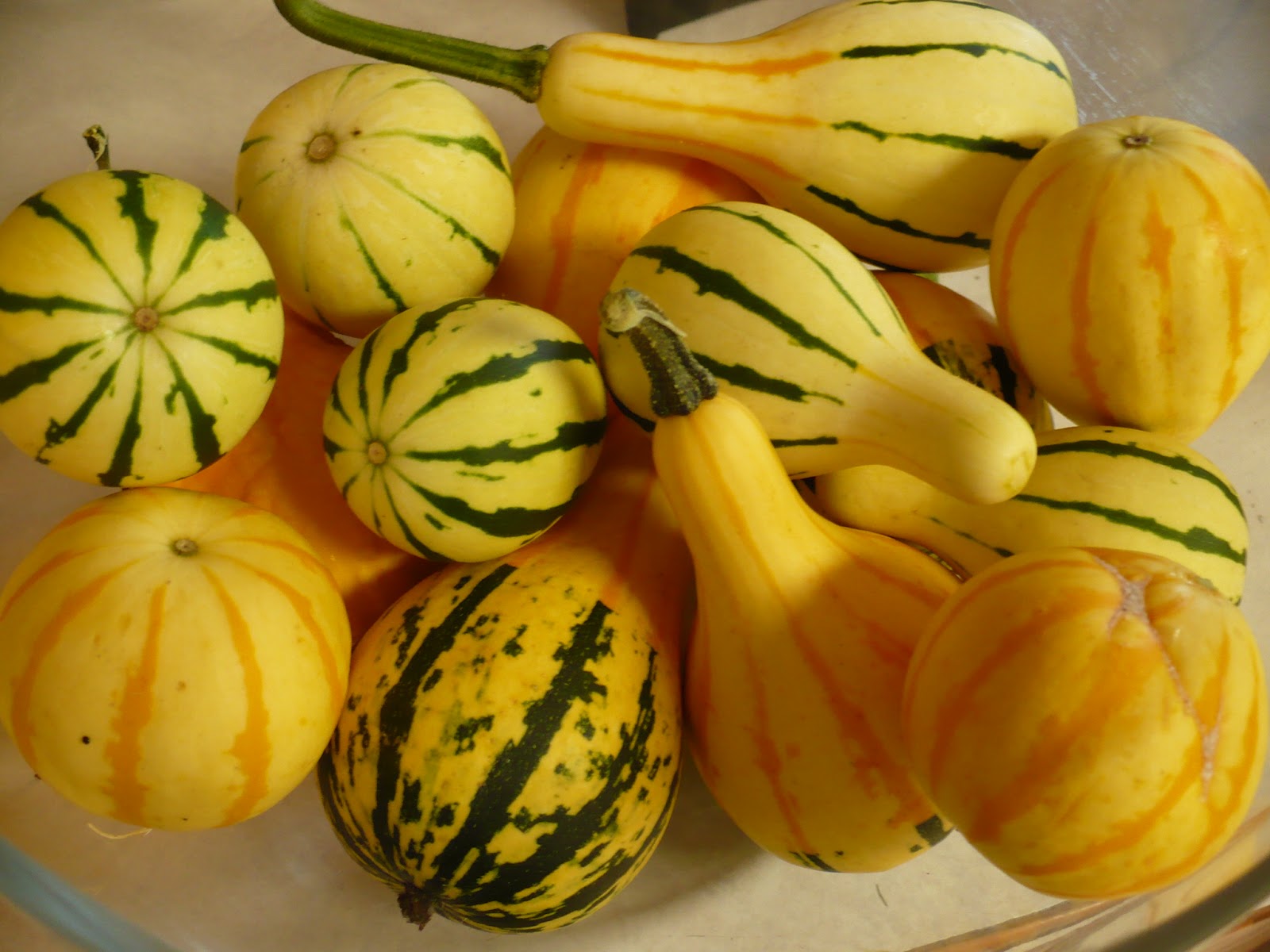
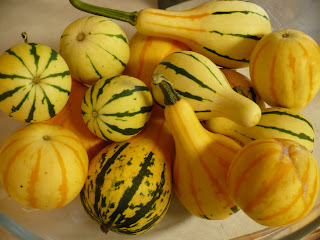
These gourds were volunteers this year. I don't know what to do with them except to use them for decorating. They are pretty.
Saturday, September 08, 2012
Mission Accomplished
Mission accomplished!
I picked almost a full bushel of tomatoes (some just starting to turn pink) and canned 7 quart jars of tomatoes and 6 pints of salsa.

Now to label them. I've been printing labels using Avery shipping label forms (10 to a page) and my own logo. On the label I put my logo, my "bright meadow farms" name, the name of the contents, the ingredient list, the date processed, and a favorite quotation. But sometimes the "sticky" on these labels doesn't hold up to glass jars and long storage.
Today I noticed that on mycokerewards.com I had enough points entered to get a free page of stickers from stickeryou.com. Exploring their site, I found they had labels designed for food storage-- but didn't allow custom artwork. But then I also noticed they have a sister "make+print" site that allows uploads. The problem is, that I will need to wait to receive the labels! I assume that "free" means I will pay for shipping... and it is only one sheet. Ordering in quantity would mean hand-writing some of the information, at a minimum the date. I typically can in batches of 7 jars, since that is what the canner will hold, not 9, the number of labels on one sheet.
hmmm. I also noticed their "store locator" tool and find that the local Hobby Lobby carries some of their blank labels.
I picked almost a full bushel of tomatoes (some just starting to turn pink) and canned 7 quart jars of tomatoes and 6 pints of salsa.

Now to label them. I've been printing labels using Avery shipping label forms (10 to a page) and my own logo. On the label I put my logo, my "bright meadow farms" name, the name of the contents, the ingredient list, the date processed, and a favorite quotation. But sometimes the "sticky" on these labels doesn't hold up to glass jars and long storage.
Today I noticed that on mycokerewards.com I had enough points entered to get a free page of stickers from stickeryou.com. Exploring their site, I found they had labels designed for food storage-- but didn't allow custom artwork. But then I also noticed they have a sister "make+print" site that allows uploads. The problem is, that I will need to wait to receive the labels! I assume that "free" means I will pay for shipping... and it is only one sheet. Ordering in quantity would mean hand-writing some of the information, at a minimum the date. I typically can in batches of 7 jars, since that is what the canner will hold, not 9, the number of labels on one sheet.
hmmm. I also noticed their "store locator" tool and find that the local Hobby Lobby carries some of their blank labels.
Subscribe to:
Posts (Atom)

 Posts
Posts